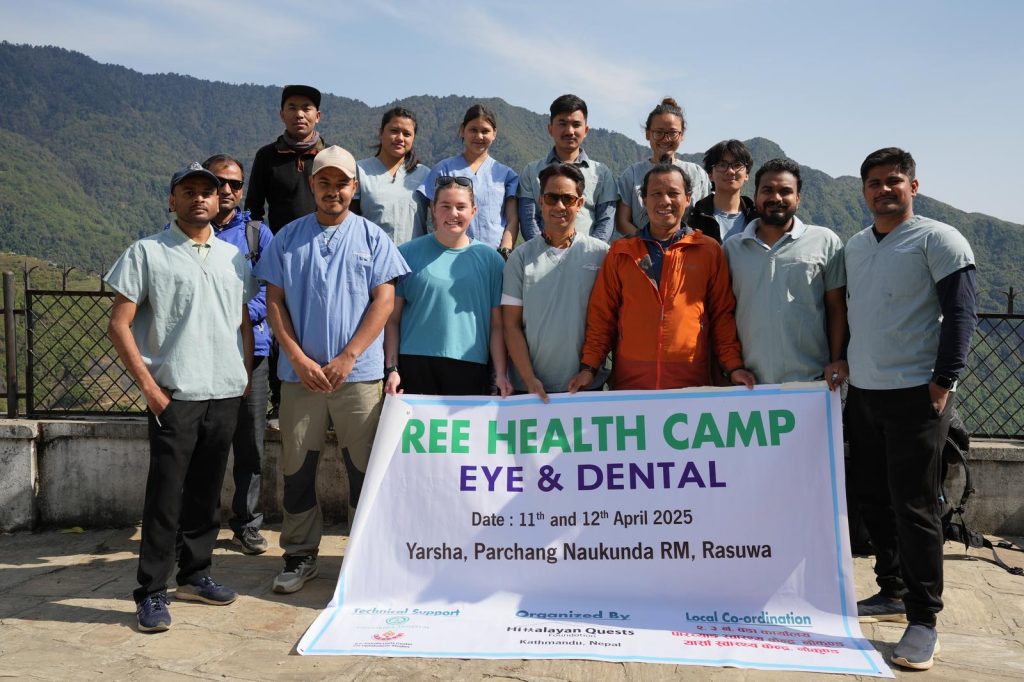

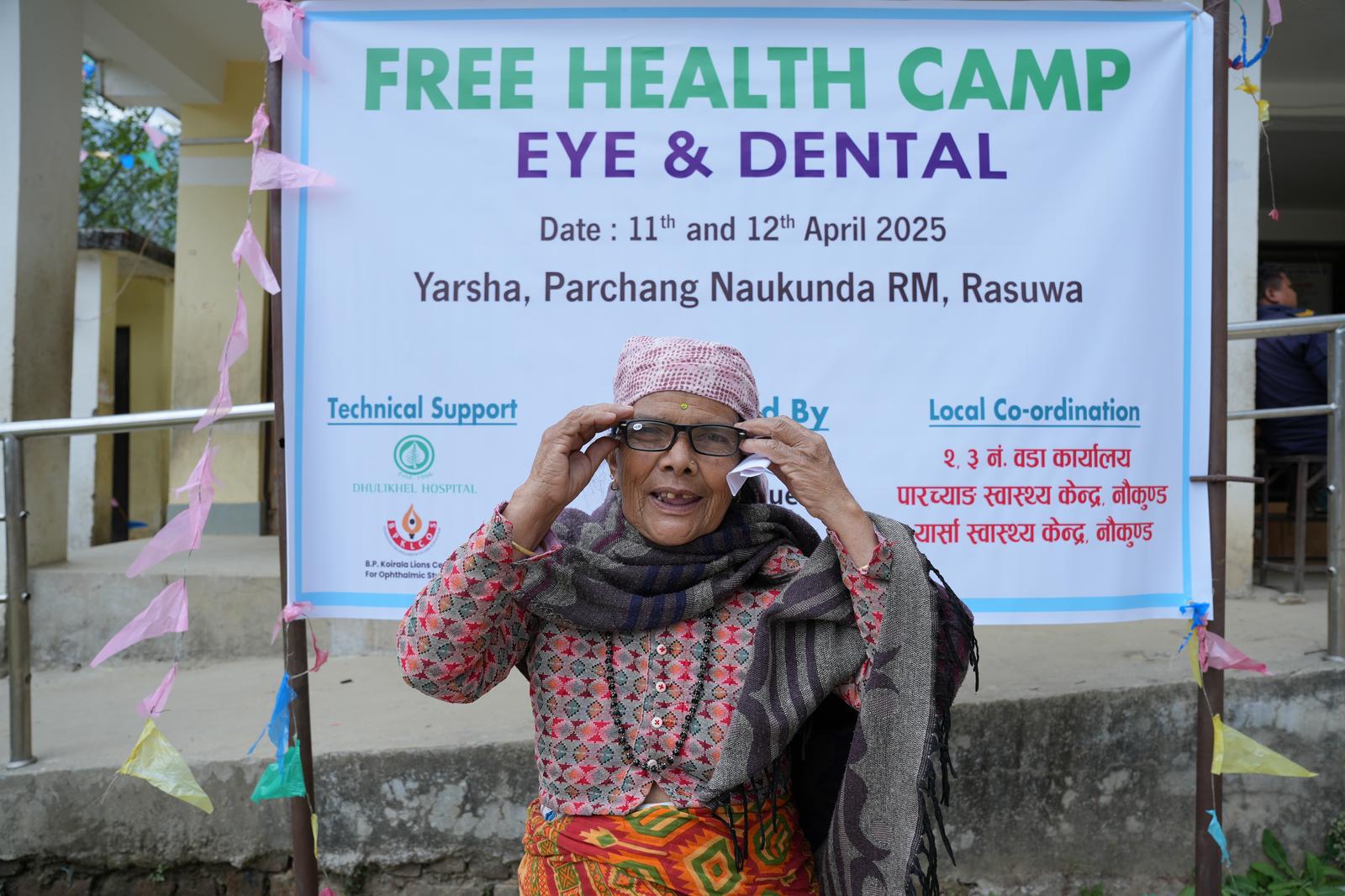
Early Friday morning, April 11th, the team woke up to a warm breakfast generously prepared by their host families. Due to the team’s late arrival the previous night and being spread across neighbouring villages, everyone gathered at a nearby school, the location for that day’s health camp.
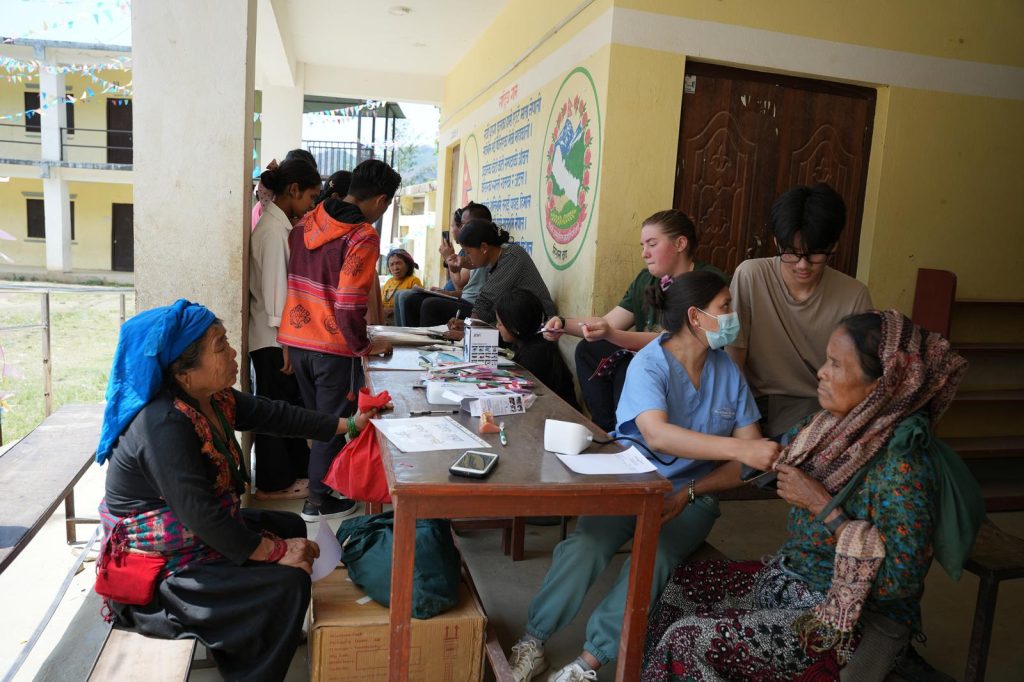
As always, the first job of the day was to set up. Different classrooms were allocated for the dental and vision teams and the registration and weight/blood pressure stations were set up outside, but under cover as the weather was a little damp and threatening more rain.
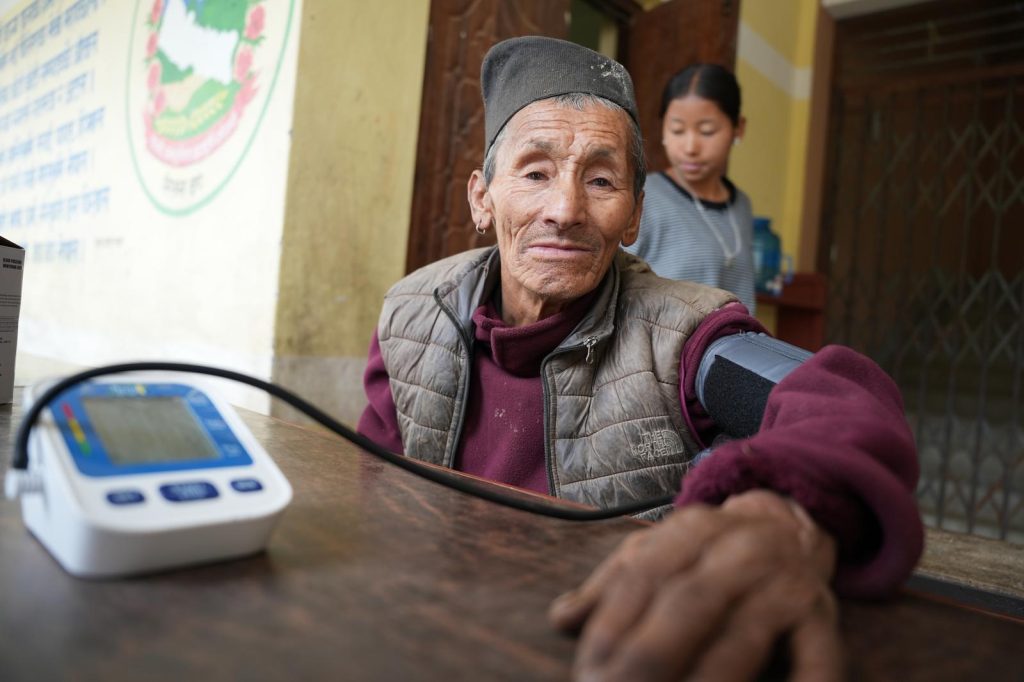
As each patient registers to be seen, we log their name, gender, age and the consultation they have come for before handing them their registration form. They are then weighed and have their blood pressure taken before heading off to sit in line to be seen by the respective health team.
In total, 158 patients were registered: 58 for eye care, 25 for dental and 75 for both. Of those, 76 were male and 82 were female. Our youngest patient was just 9 years old, and the oldest 84.
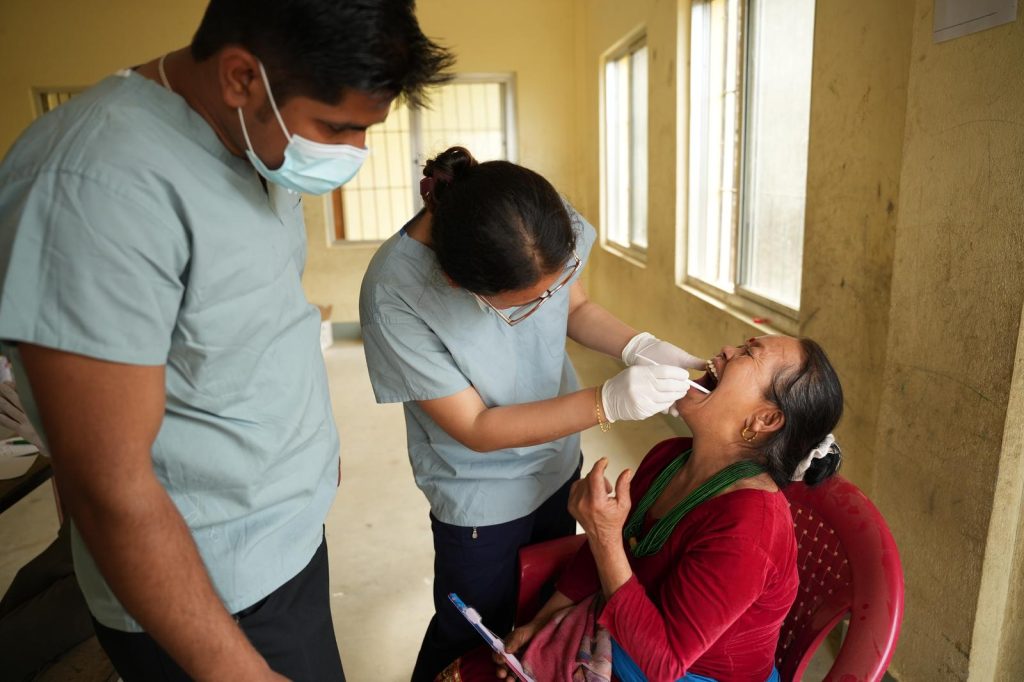
Our dental team, Ashok, Sony, Krishan and Ramesh, all used to working in basic conditions at rural health camps, had their instruments, medicines and sanitation stations organised in no time, ready for their first patients of the day
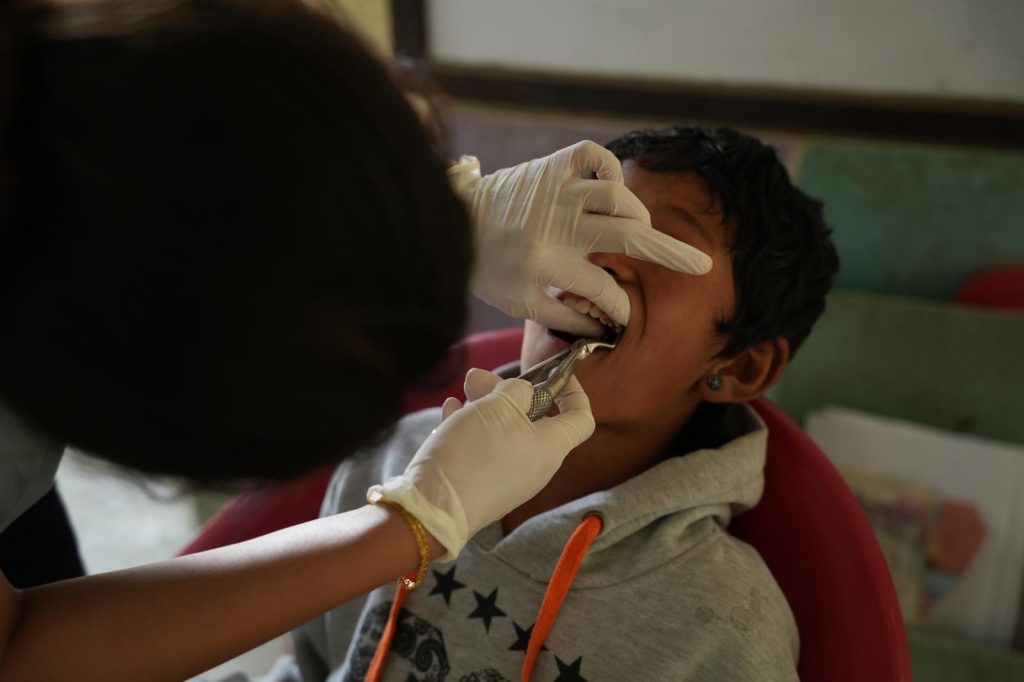
They provided dental care to 72 individuals, including 35 tooth extractions and 2 fillings. One case involved a complicated root canal that unfortunately couldn’t be completed due to limited equipment and time. The patient was referred to a hospital in Kathmandu where they are able to receive the necessary treatment free of charge along with 22 others all requiring root canal treatment. Everyone who visited the dentists left with a free tooth brush to encourage better and more frequent tooth brushing practices.
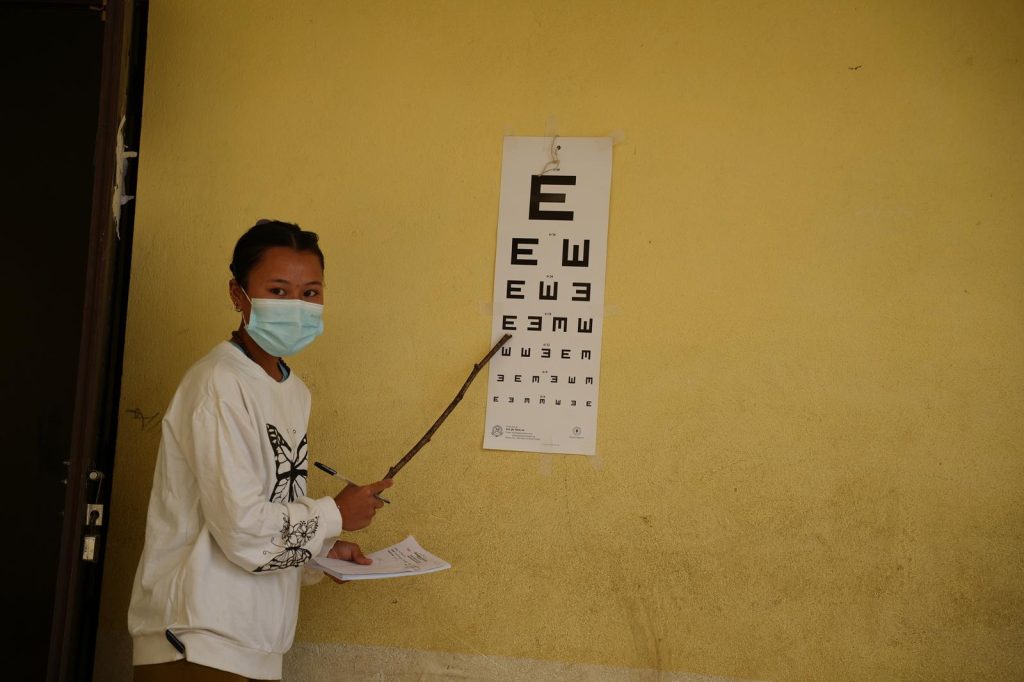
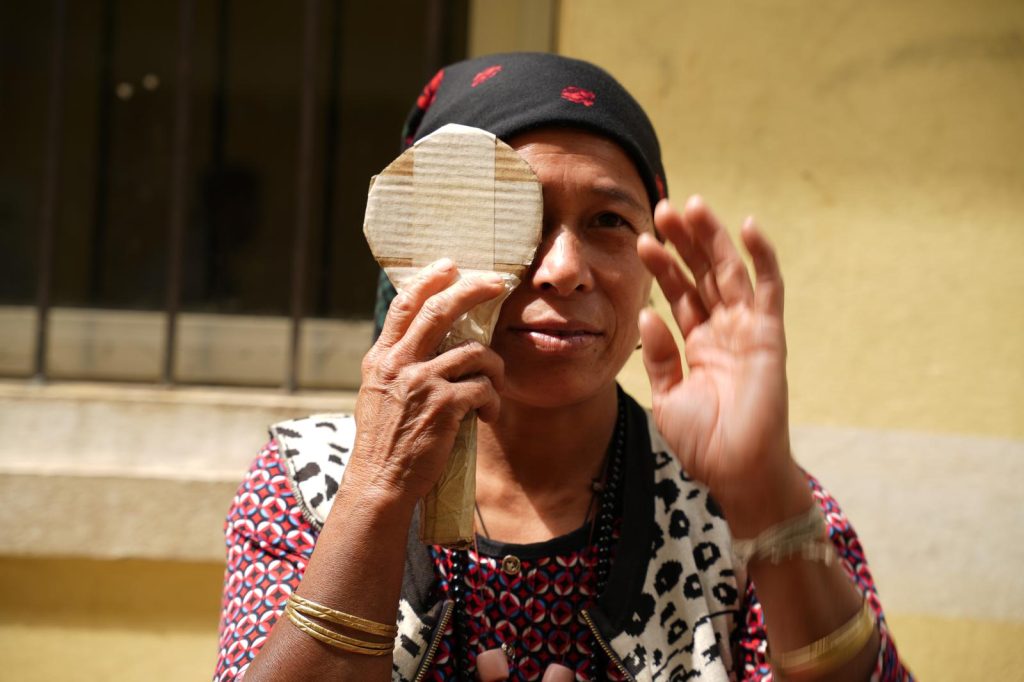
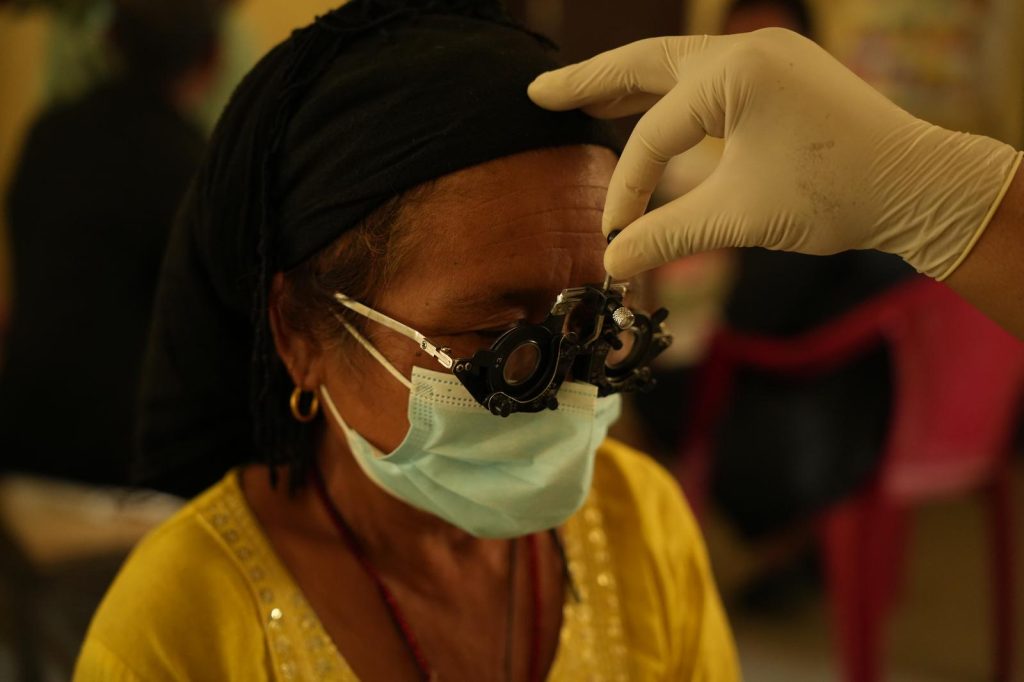
Over with our eye doctor team, our volunteers began by setting up the visual acuity test, the first step before patients saw the doctors. Instead of using letters or numbers that get progressively smaller, we used charts featuring a simple symbol, a shape resembling a capital ‘E’. With one eye covered at a time and sitting at a set distance from the chart, patients were asked to indicate the direction the ‘E’ was pointing: up, down, left or right.
For most, this was a completely unfamiliar process and it often took a few moments for them to understand what was being asked. Once they completed this initial screening, they then proceeded to the eye doctors Ramesh, Gautam and Rameshwar, for more in-depth evaluations and care.
A surprising number of cases of amblyopia, commonly known as lazy eye were diagnosed, especially among patients around 30 years old. This condition causes reduced vision in one eye due to improper visual development early in life. Thanks to our screenings, we were able to identify and counsel those individuals affected by it.
Of the 133 patients that were seen, 20 were recommended for cataract surgery (15% of all those seen!) scheduled for the 20th April. All costs related to the surgery will also be covered by the HQ Foundation. On top of this, 52 pairs of free reading glasses were dispensed.
Despite the overall turn out being relatively low, mostly due to the wet weather, many of those who did attend had walked for a considerable length of time to be seen, some as long as 3 hours.
One such story is of Smriti, a 12-year-old girl, who made the 3-hour journey with her three sisters after learning about the health camp through a post they had seen on Facebook. All four girls were suffering from tooth pain and each received a thorough dental cleaning and some education on dental hygiene best practice before their long journey back home.
Another family was inspired to attend by their grandfather, Nima Dai, a longtime member of the Himalayan Quests team and leader of our porter crews. He brought his grandchildren, both experiencing dental pain, on the same three-hour walk. This was the first time they had ever received dental care resulting in 15 year old Suchana having one tooth extracted and her 11 year old cousin, Samir, two extractions. They both received some much needed dental hygiene before the long journey home, predicted to take nearer 5 hours given that it was uphill all the way!
The team was finally able to wrap up the day around 4pm, whereby they all piled onto a crowded local bus with their equipment and personal gear, for the hour long journey to Yarsha village, the venue for the following day’s camp, arriving to a beautiful sunset. Once settled with their host families, and after dinner and a debrief, everyone headed to bed for a well deserved rest, before doing it all again in the morning.
A Himalayan thank you to everyone involved in making this camp a success. The school for providing the venue, the local health post workers for their support, our medical and volunteer teams, our donors and of course, all the patients who took the time to come and get checked over.